FAQs
Q: HOW MUCH DOES IT COST TO GO FOR A RIDE?
A: As an industry any reputable balloon company will charge between $175.00 and $225.00 per person. Being FAA certified, balloons are very expensive to own and operate. With the cost of crew, chase trucks, aircraft maintenance and commercial insurance anyone selling flights any cheaper are cutting corners somewhere.
Q: HOW DO BALLOONS FLY?
A: Balloons operate through the basic principles of gravity and heat transfer. As air inside the balloon is heated, it rises. As the air inside the balloon cools or is vented, it descends.
Q: WHAT EQUIPMENT IS REQUIRED FOR BALLOONS?
A: Balloons include several parts: the envelope (the fabric portion of the balloon), the basket or gondola, burners and fuel systems. The basket is made of wicker, which is strong yet flexible, and is aesthetically pleasing. Burners can come in either single, double, or triple configurations, and each puts out the equivalent of over 5,000 horsepower. Required instruments include: Altimeter for displaying altitude, Variometer to show rate of climb or decent, and Pyrometer that shows the air temperature in the top of the envelope. Fuel systems consist of stainless steel propane tanks and fuel hoses. Other necessary equipment includes an inflator fan, two-way radios and some means of transporting the balloon from location to location when it is not flying.
Q: HOW ARE BALLOONS INFLATED?
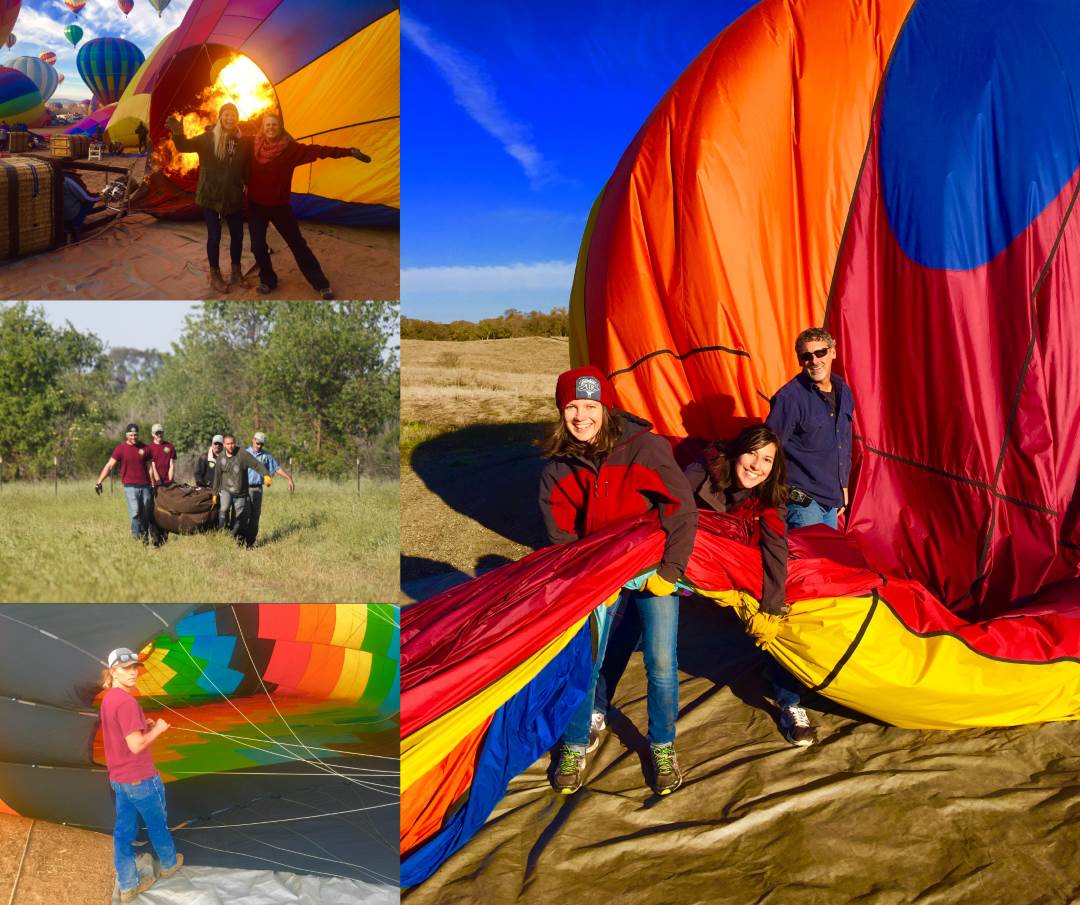
A: After the “envelope” is laid out, a gas powered fan forces unheated air through the balloons “mouth” and into the envelope. This is called cold inflation. After it fills, the balloon is “stood up” by igniting the burners and heating up the air inside. That’s called hot inflation.
Q: CAN YOU STEER A BALLOON?
A: Winds determine a balloon’s direction. Balloonists can steer a balloon, to a limited extent, by adjusting the balloon’s altitude to make use of different wind speeds and directions. You use the burners to heat the air and make the balloon rise. You may stop “burning” the fuel and stay level for awhile and then start descending. Venting air out the top makes you go down quicker. Winds at different heights blow different directions. Follow the wind patterns and adjust the altitude of your balloon to send you in the direction you would like to go.
Q: WHAT FUEL DO HOT AIR BALLOONS USE?
A: Hot air balloons carry 20 to 45 gallons of propane in stainless steel fuel tanks.
Q: HOW HIGH DO BALLOONS FLY?
A: Balloons can fly to 10,000 feet or higher. A typical pleasure flight would fly from treetop level to a few thousand feet.
Q: HOW LONG IS AN AVERAGE BALLOON FLIGHT?
A: Usually a balloon flight lasts about an hour. At an average wind speed of about 5 mph, a balloon will fly 2 - 8 miles. Ground crews follow the balloon, talking on the radio with the pilot. The balloon will land in an open area and the ground crew is there to help with the recovery and take everyone back to the launch site.
Q: WHY DO BALLOONS FLY IN EARLY MORNING AND LATE EVENING?
A: Winds are generally most calm and favorable the first hours after sunrise and the last hours before sunset. The sun’s uneven heating of the earth’s surface causes strong, variable winds. In the morning, it takes a few hours to heat the earth’s surface enough to generate the thermal activity that creates wind. In the evening, the sun’s intensity has diminished enough to reduce winds to acceptable flight levels. Ideal winds are 3-6 mph.
Q: HOW BIG IS A BALLOON?
A: The most popular size is about 55 feet wide and 7 stories tall, uses almost 1800 sq. yards of nylon fabric, 3 miles of thread, a 1/2 mile of reinforced nylon webbing (load tapes), and holds about 90,000 sq.ft. of heated air. Some “special shape” balloons and larger commercial passenger balloons are much, much bigger (150,000sq.ft. to 300,000sq.ft).
Q: HOW MANY PEOPLE DO YOU NEED TO FLY A BALLOON?
A: At least a crew of 3: 1 pilot and at 2 ground crew. Crews are very important to prepare for a launch, follow, and safely recover the balloon. Passengers often assist as crew. It is all part of the fun.
Q: HOW COULD I LEARN TO FLY A BALLOON?
A: Balloon pilots come from all walks of life. Anyone with the desire to learn to fly a balloon can become a pilot. Start by learning about balloons while working on a crew and/or taking lessons from a pilot instructor. The FAA (Federal Aviation Administration) will issue a balloon pilot’s license after you have gained the required experience, passed a written test, and passed a flight test with a FAA examiner.
Q: HOW MUCH DOES A BALLOON WEIGH?
A: The average hot air balloon (with a deflated envelope, a gondola or basket, 30-40 gallons of fuel in 2 tanks) weighs about 800 pounds. Once inflated and in the air it will weigh about 2 1/2 tons! Some special shape balloons weigh thousands of pounds!
Q: HOW MUCH DOES A BALLOON COST?
A: Like cars and boats, new balloons vary in size and amenities. You can start with a new smaller sport model for around $18,000 . These balloons typically carry the pilot and one passenger. The larger balloons that carry four to six persons in addition to the pilot will range in price between $20,000 and $55,000 (for envelope, gondola, tanks, and instruments). Used equipment is available. The really big commercial balloons (10 to 15 passengers) and special shapes are “Market Price”.
Q: HOW CAN I GET INVOLVED IN BALLOONING?
A: By getting involved with a local pilot and a local balloon club like the Southern California Balloon Association. Many enthusiasts get their start as a member of a chase crew. If you live in the Southern California or Coloma’s Gold Country area, e-mail us or give us a call and ask how you can become a member. You might earn free flight time and/or training as crew member.
SkyDrifters - 1-888-FLY-0484 - info @ skydrifters.com
Entries and comments feeds.
Valid XHTML and CSS. 22 queries. 0.777 seconds. ^Back to Top^
Copyright © 2007 - SkyDrifters. All rights Reserved.